The department runs a community fire and CPR program for Abington Township. Here is what it covers, who it is for, and how to get the crew to your group.
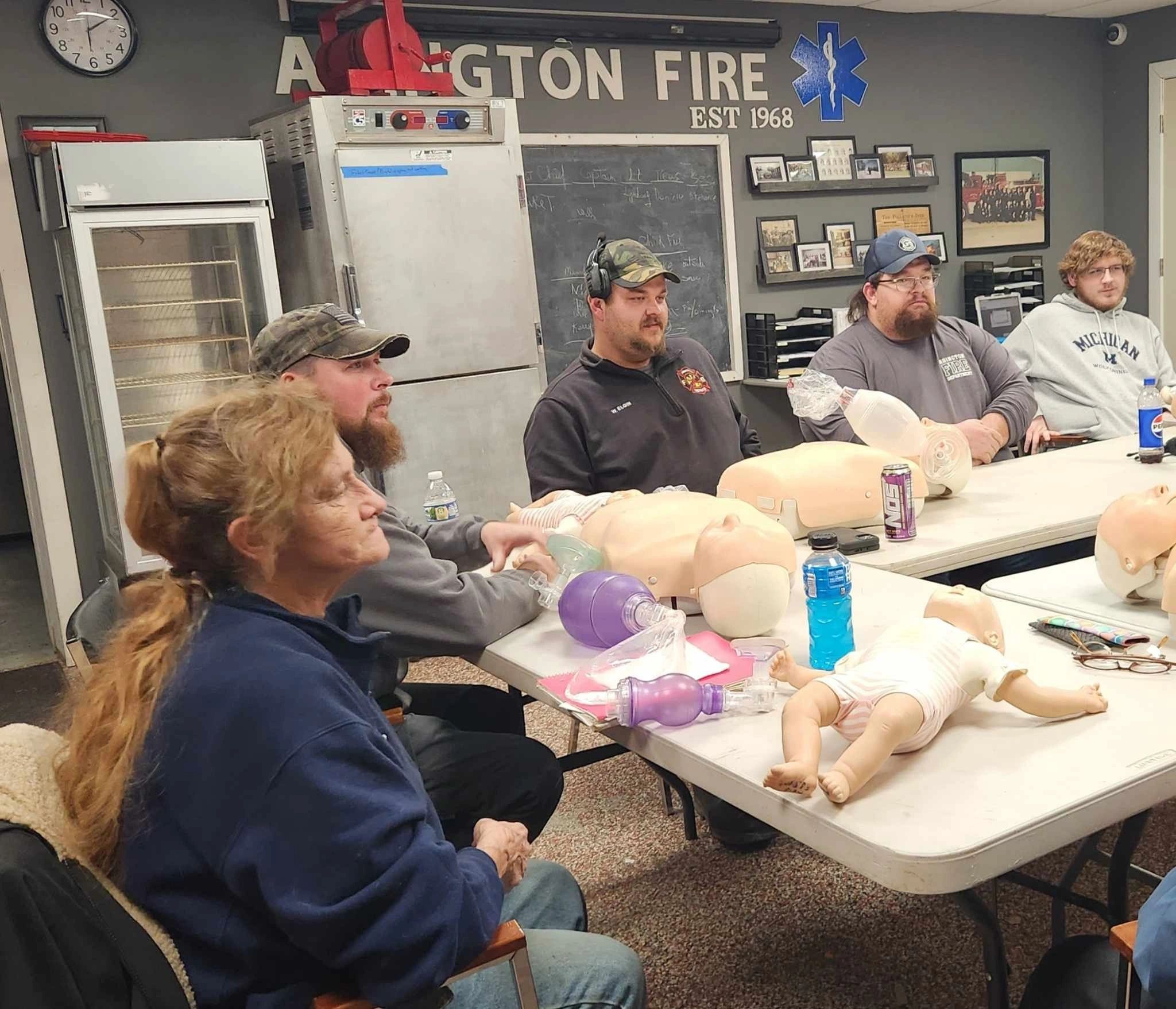
The Abington Township Volunteer Fire Department runs a community fire and CPR program as one of its core services. It teaches practical home fire safety and hands-on CPR to township residents and groups, delivered by the firefighters who would actually be responding if you called. Contact the station at (765) 855-3950 to arrange a session for your group.
There is a reason a fire department spends unpaid evenings teaching rather than training. On most of the calls we run, the outcome was substantially decided before we arrived — by whether a smoke alarm worked, whether someone got out, whether anyone started compressions.
Teaching is the only part of that we can influence in advance.
Why this matters more in a rural township
Abington Township covers about twenty-one square miles of Wayne County with no town at its center and long roads between properties. Our response times are honest rural response times, and no amount of training changes the distance.
What that means in practice: in a cardiac arrest, survival falls sharply for every minute that passes without chest compressions. In a house fire, the critical decisions happen in the first two minutes. In both cases the person who matters most is already in the room.
Nationally, the National Volunteer Fire Council reports that call volumes have more than tripled over forty years, with the growth coming overwhelmingly from medical calls. That is our experience too. The most useful thing we can hand a township resident is not a fire safety leaflet. It is the ability to keep somebody alive for the minutes before we get there.
What the CPR portion covers
- Recognizing cardiac arrest. What it actually looks like, including agonal breathing, which is routinely mistaken for the person still breathing.
- Hands-on compressions. On a manikin, with feedback. Correct depth and rate are both things people consistently get wrong until they have physically done it.
- Using an AED. Public access defibrillators are built for untrained bystanders and talk you through every step out loud. Having handled one once removes the hesitation that costs minutes.
- Calling 911 well. Address first, including the road and nearest cross road, then what is happening. Dispatchers can coach compressions over the phone while we are en route.
Reid Health Community Engagement donated two AEDs to this department to replace outdated units, which is part of what keeps Abington operating as a non-transport basic life support provider. That equipment does its job best in a township where people are not afraid of it.
What the fire safety portion covers
The practical, household version of what we would want every home in the township to have sorted:
- Smoke alarm placement, monthly testing, and the ten-year replacement rule almost nobody knows
- Building and practicing a home escape plan, including a night drill
- Cooking fire safety, which matters because cooking is the leading cause of home structure fires
- Fire extinguisher selection and use, including the harder question of when not to use one
- Carbon monoxide, heating equipment, and wood stoves — the winter problems in rural Indiana
- Rural address visibility, because we cannot help a home we cannot find
For children, the content shifts: the sound of the alarm, two ways out, getting low, meeting outside, and meeting a firefighter in full gear so that the person in the mask is not frightening at three in the morning. The department's community coloring book was built for exactly this — forty pages of safety content and local scenes that go home with the family and stay on the kitchen table.
How to get the crew to your group
Call the station at (765) 855-3950 or use the contact page. Tell us roughly how many people, what kind of group, and what you want out of it.
We will work with community groups, workplaces, schools, churches, clubs, and neighbors who want to get a few households together. Nobody needs to be an expert and nobody gets singled out. Most sessions end with people staying twenty minutes past the end to ask about their own house, which is the sign it worked.
Every one of these sessions is run by volunteers on their own time, with equipment the township and its partners paid for. If you want more of them to happen, the store and the Firefighter's Hat Fund are what fund the manikins, the training aids, and the hours.
Common questions
Does Abington Township VFD offer free CPR training?
The department runs a community fire and CPR program for Abington Township as part of its services. Contact the station at (765) 855-3950 or through the contact page to ask about sessions for your group.
Why does bystander CPR matter so much in rural areas?
Because help has further to travel. Survival from cardiac arrest drops sharply with every minute without compressions, so in a township with long roads and rural response times, the person already in the room is the most important responder.
Who can request a fire safety or CPR session?
Community groups, workplaces, schools, churches, clubs, and neighborhood groups in and around Abington Township. The department will work with you on size and timing.
What does the fire safety portion cover?
Practical home safety: smoke alarm placement and testing, escape planning, cooking fire safety, fire extinguisher use, and what to do and not do in the first minute of a home fire.
Do I need to be certified to use an AED?
No. Public access AEDs are designed for untrained bystanders and talk the user through each step aloud. Training makes people faster and more confident, which is exactly why the department teaches it.
Sources
- Abington Township Volunteer Fire Department. Department history
- National Volunteer Fire Council. Volunteer Fire Service Fact Sheet
Supporting the department
Manikins, training aids, AEDs and the hours to teach with them all have to be funded. Here is how.
- The department store. We have stood up a store so the community can back the department directly. Every purchase helps pay for training hours, replacement gear, and the fire education we bring into Abington Township homes and classrooms.
- The community coloring book. A 40-page safety and coloring book built for Abington families, with local scenes, a twelve-month family safety calendar, and fire safety pages children actually use. Sponsorships and the Firefighter’s Hat Fund put the proceeds straight into training and community fire education.
- Our channels. Watch the crew at work on YouTube and follow day-to-day department news on Facebook.
- The Station News. Our free monthly newsletter — calls, training, events, and what the department needs — delivered once a month. Sign up on the newsletter page and you will not miss anything that happens in the township.
Frequently asked questions
Does Abington Township VFD offer free CPR training?
The department runs a community fire and CPR program for Abington Township as part of its services. Contact the station at (765) 855-3950 or through the contact page to ask about sessions for your group.
Why does bystander CPR matter so much in rural areas?
Because help has further to travel. Survival from cardiac arrest drops sharply with every minute without compressions, so in a township with long roads and rural response times, the person already in the room is the most important responder.
Who can request a fire safety or CPR session?
Community groups, workplaces, schools, churches, clubs, and neighborhood groups in and around Abington Township. The department will work with you on size and timing.
What does the fire safety portion cover?
Practical home safety: smoke alarm placement and testing, escape planning, cooking fire safety, fire extinguisher use, and what to do and not do in the first minute of a home fire.
Do I need to be certified to use an AED?
No. Public access AEDs are designed for untrained bystanders and talk the user through each step aloud. Training makes people faster and more confident, which is exactly why the department teaches it.