
You have about two minutes to get out of a burning house. Here is how an Abington Township family builds and practices an escape plan that holds up when the alarm goes off at 3 a.m.
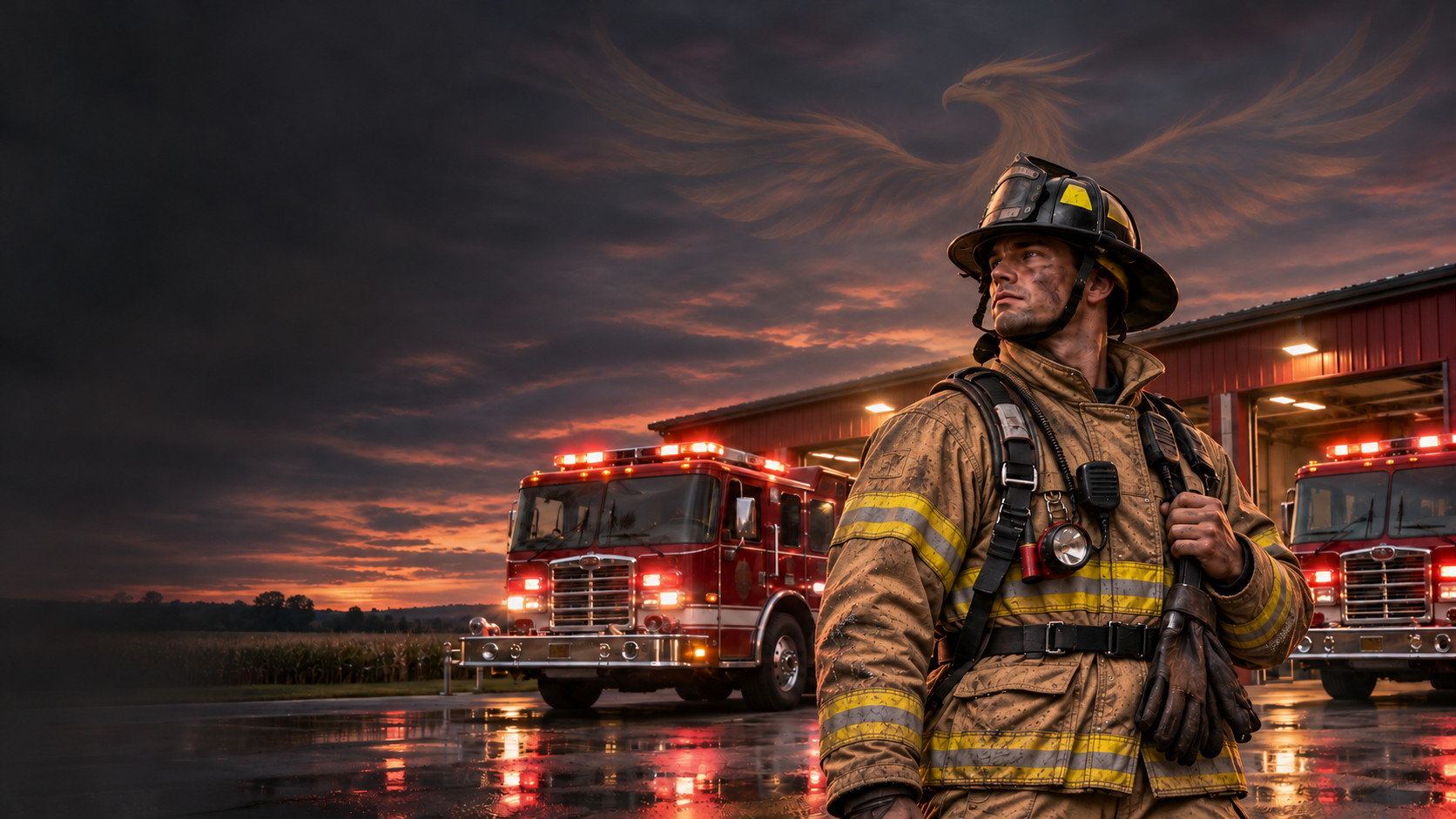
You have about two minutes to get out of a burning house. Modern furniture and building materials burn hotter and faster than what filled homes forty years ago, which has cut typical escape time from roughly seventeen minutes down to two or three. That is why a practiced escape plan is worth more than any single piece of equipment you can buy.
We have stood in enough Abington Township driveways at two in the morning to know what the difference looks like. The families who get out clean are almost never the ones with the most expensive alarms. They are the ones who had talked about it, walked it, and knew where to meet.
Here is how to build that plan in one evening.
Why does a house fire move so much faster now?
It comes down to what your furniture is made of. A sofa framed in solid wood and stuffed with cotton burns slowly. A sofa built from engineered board and filled with polyurethane foam behaves more like a container of fuel. Add laminate flooring, synthetic carpet, and the open floor plans that let heat and smoke move freely from room to room, and the fire reaches flashover — the moment everything in a room ignites at once — dramatically sooner.
The practical consequence for your family is simple. The plan has to be fast and it has to be automatic, because you will not have time to think it through while it is happening.
Step one: find two ways out of every room
Walk your house room by room, at night, with the people who live there. In each room ask one question: if the door is blocked, how does someone get out of here?
The second way out is almost always a window. That means you need to know, for every bedroom:
- Does the window actually open? Paint, swollen frames, and security film turn a planned exit into a wall. Open each one now and find out.
- Can the person who sleeps in that room open it alone? A seven-year-old and a grandparent have different answers to this question.
- If the room is upstairs, what is the plan? An escape ladder stored in that room, not in the garage.
- If there is a storm window or a screen, how does it come out?
Many homes in rural Wayne County have added rooms, finished basements, and converted spaces over the years. A basement bedroom with one small, high window deserves an honest conversation before it is somebody's bedroom.

Step two: pick one meeting place and name it
Pick something that cannot move: the mailbox, a specific tree, the neighbor's fence post at the end of the drive. Give it a name everyone in the house uses. “Meet at the mailbox” works. “Meet out front” does not, because out front is a large and confusing place at three in the morning with smoke rolling out of a window.
Two things make a meeting place a good one. It is far enough from the house that you are clear of heat, falling debris, and the ground the engine needs. And it is visible from the road, so that the first crew up your driveway can see your family standing together and get an immediate answer to the only question that matters to us on arrival: is everyone out?
Step three: decide who helps whom
Every plan needs assignments. Someone wakes the toddler. Someone helps the grandparent with the walker. Someone grabs the dog's leash by the back door only if it is already on the way out, and never otherwise. Write it down and put it on the refrigerator.
If a member of your household would have real difficulty getting out alone — mobility, hearing, a medical device — move that person to a ground-floor room near an exit if you possibly can. And call us during business hours at (765) 855-3950. We would far rather know about it on a quiet Tuesday than learn about it from a neighbor while we are pulling a line.
Step four: practice it, including in the dark
Twice a year, run the drill. Press the test button on the smoke alarm so everyone hears the actual sound they need to react to, then time how long it takes for the whole household to reach the meeting place.
Make one of those two drills a night drill. Most fatal home fires happen while people are asleep, and a dark, smoke-filled hallway is a completely different place from the one your children walk through every morning. Have them practice getting low and moving along a wall to the door.
The first time you do this it will feel silly. The second time it will take half as long. By the third time, the kids will be the ones correcting you — and that is the point. You are not trying to make them remember a plan. You are trying to make them not need to.
Step five: the three rules that do not change
- Get out, stay out. Not for the laptop, not for the photo albums, not for the cat. Tell us the cat is inside and where it sleeps. We will do what we can. We cannot do anything for you if you go back in.
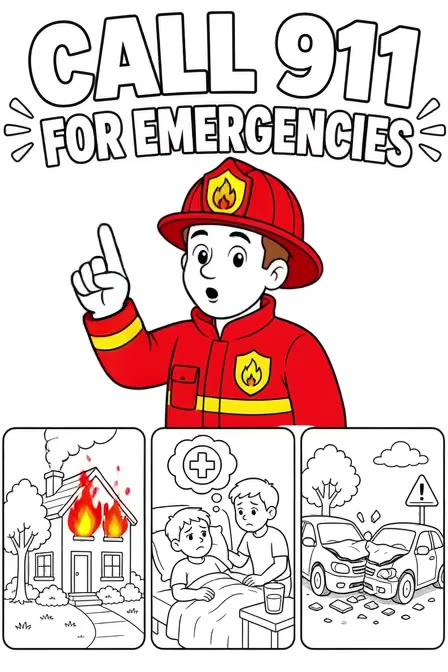
- Call 911 from outside. From the meeting place, from a neighbor's, from the driveway. Give the dispatcher your address first — including the road name and the nearest cross road, which matters on our rural routes — and then everything else.
- Close doors behind you as you go. A closed bedroom door buys real minutes against heat and smoke. If you cannot get out of a room, close the door, block the gap at the bottom with bedding, and get to the window where we can see you.
One more thing worth doing tonight
Walk outside and look at your address number from the road, in the dark, the way a driver would. Reflective numbers at least four inches tall, on a post or mailbox at the end of the drive, are one of the cheapest safety upgrades a rural household can make. We cannot help a family we cannot find, and Abington Township has a lot of long drives and dark roads.
A plan takes one evening. The practice takes ten minutes, twice a year. It is the best return on time of anything we could ask you to do.
Common questions
How much time do I actually have to get out of a burning house?
Usually two to three minutes from the moment the smoke alarm sounds. Furniture and building materials made with synthetic materials release heat far faster than older furnishings, so a room can reach flashover in a fraction of the time it once took.
What should a home fire escape plan include?
Two ways out of every room, a path to each one that a child can follow in the dark, one outside meeting place everyone knows by name, and a practiced habit of calling 911 from outside the house rather than from inside it.
How often should my family practice a fire drill at home?
Twice a year is the standard the fire service recommends. Run one of those drills at night with the lights off. A plan that only works in daylight is not a plan, because most deadly home fires start when people are asleep.
Where should our family meeting place be?
Somewhere fixed and outside: the mailbox, a specific tree, the end of the driveway. Far enough from the house to be safe, close enough and visible enough that arriving firefighters can see you and know everyone is accounted for.
What if someone is missing when we get outside?
Tell the first firefighter who arrives. Give us a name, an age, and the room they were likely in. Do not go back inside. We arrive with air, protective gear, and a thermal camera, and a trained crew finds people far faster than an untrained one can.
Sources
- National Fire Protection Association. Educational Messages Desk Reference, 2026 edition
- National Fire Protection Association. Safety with cooking equipment
Supporting the department
Everything above costs you an evening. Keeping a volunteer department able to answer when the plan fails costs rather more, and this is where it comes from.
- The department store. We have stood up a store so the community can back the department directly. Every purchase helps pay for training hours, replacement gear, and the fire education we bring into Abington Township homes and classrooms.
- The community coloring book. A 40-page safety and coloring book built for Abington families, with local scenes, a twelve-month family safety calendar, and fire safety pages children actually use. Sponsorships and the Firefighter’s Hat Fund put the proceeds straight into training and community fire education.
- Our channels. Watch the crew at work on YouTube and follow day-to-day department news on Facebook.
- The Station News. Our free monthly newsletter — calls, training, events, and what the department needs — delivered once a month. Sign up on the newsletter page and you will not miss anything that happens in the township.
Frequently asked questions
How much time do I actually have to get out of a burning house?
Usually two to three minutes from the moment the smoke alarm sounds. Furniture and building materials made with synthetic materials release heat far faster than older furnishings, so a room can reach flashover in a fraction of the time it once took.
What should a home fire escape plan include?
Two ways out of every room, a path to each one that a child can follow in the dark, one outside meeting place everyone knows by name, and a practiced habit of calling 911 from outside the house rather than from inside it.
How often should my family practice a fire drill at home?
Twice a year is the standard the fire service recommends. Run one of those drills at night with the lights off. A plan that only works in daylight is not a plan, because most deadly home fires start when people are asleep.
Where should our family meeting place be?
Somewhere fixed and outside: the mailbox, a specific tree, the end of the driveway. Far enough from the house to be safe, close enough and visible enough that arriving firefighters can see you and know everyone is accounted for.
What if someone is missing when we get outside?
Tell the first firefighter who arrives. Give us a name, an age, and the room they were likely in. Do not go back inside. We arrive with air, protective gear, and a thermal camera, and a trained crew finds people far faster than an untrained one can.