Volunteer firefighters do not work shifts. They work a normal life with a pager in it. Here is what an ordinary day looks like, and what happens when it stops being ordinary.
A volunteer firefighter does not work a shift. They go to their ordinary job, carry a pager, and respond from wherever they happen to be when it goes off. Most of what they respond to is medical rather than fire. The day looks completely normal right up until the moment it does not.
People picture the career fire service: a station, a shift, a bunk room, meals cooked together. That is a real job and a good one. It is not this one.
Here is an ordinary Tuesday in Abington Township.
Morning: you have a job
You get up and go to work, because the fire department is not where your income comes from. Volunteers in this township are farmers, nurses, drivers, trades, factory workers, teachers, people running their own small businesses.
The pager is on. If it goes off mid-morning and you are somewhere you can leave, you go. If you are mid-shift at a job that cannot release you, you do not, and somebody else does. That is the system working, not failing.
This is the single biggest constraint on volunteer fire service nationally. The National Volunteer Fire Council notes that daytime coverage is the hardest problem departments face, because the people who live in a township often work outside it. Any volunteer who can respond during the day is disproportionately valuable.
Midday: the call that is not a fire
The pager goes. It is a fall at a residence off a county road, an elderly resident, conscious, possible hip.
This is the shape of most calls now. The NVFC reports that call volume nationally has more than tripled over forty years, driven overwhelmingly by emergency medical calls rather than fires. Abington operates as a non-transport basic life support provider, which means we arrive, assess, stabilise, and work alongside the transporting ambulance service.
You are on scene for forty minutes. Most of it is talking to a frightened person on a floor, taking vitals, keeping them still and warm, and getting the history that the ambulance crew will need. Then you help with the lift, clear the scene, restock what got used, and go back to work.
No flames. No photographs. That was a real call and a good one.
Evening: training night
Twice a month the bay lights are on and the crew is drilling. Tonight it is hose evolutions and SCBA — pulling a line, advancing it, managing your air, finding your way along a wall. The same evolution, repeated, until it is automatic.
Somebody new is struggling with their mask seal. An officer sorts it out. Equipment checks happen in parallel — air cylinders, batteries, AEDs, radios, tools. Finding a dead battery on a Thursday in the bay is the whole point.
Afterwards, people stand around in the bay for twenty minutes talking about nothing. That is not wasted time. It is most of why people stay.
Night: the one that is not routine
It is 2:40 a.m. Structure fire, address on a road everybody recognises.
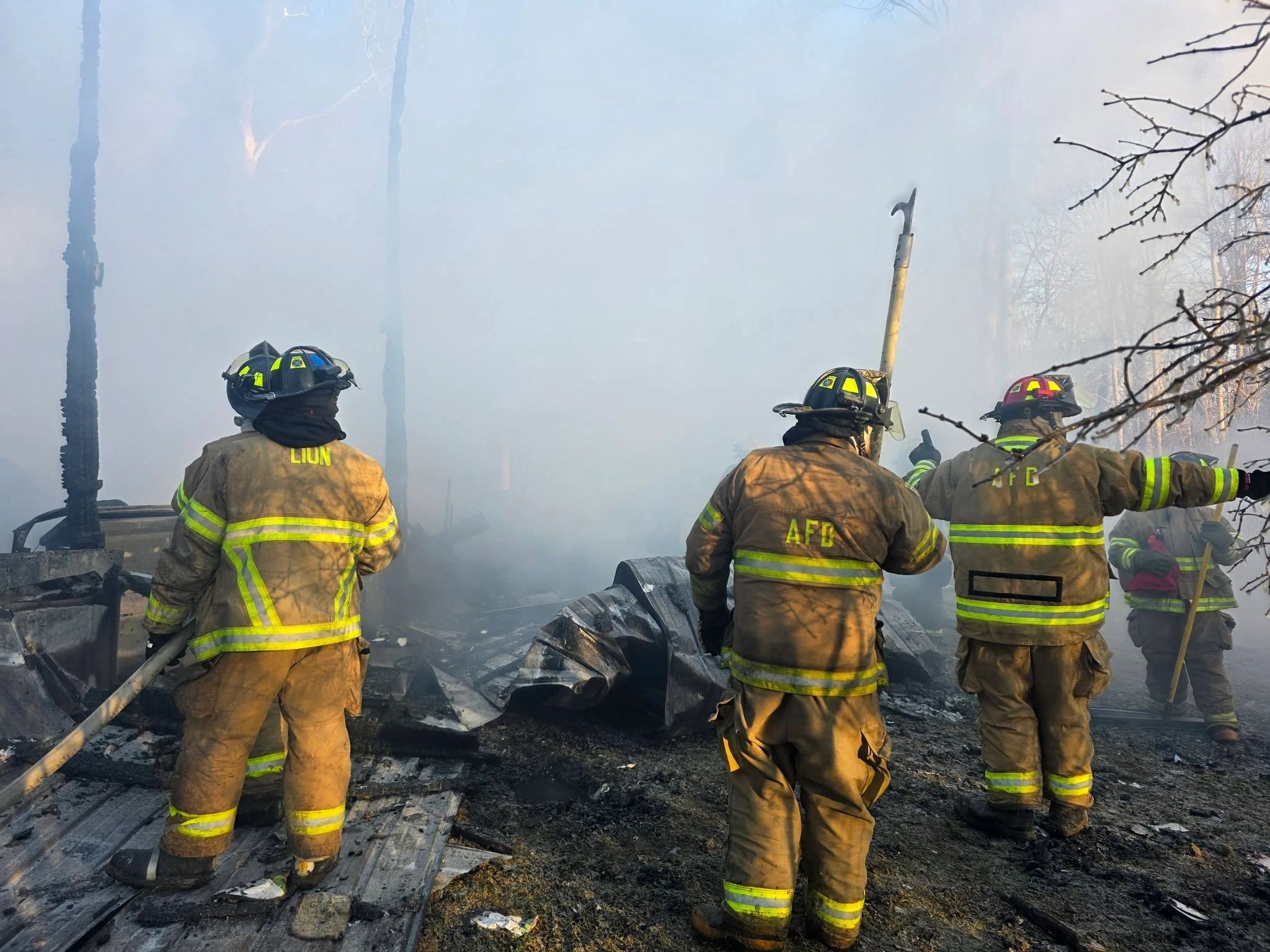
You are awake and moving before you are properly awake. In Abington, with no hydrants across most of the township, water supply is on your mind from the first second — tankers, portable tanks, and a shuttle that has to keep the attack line fed. It is the same problem the founding department solved in 1968 with an 800-gallon tanker and a Fold-A-Tank, with better equipment and the same physics.
You work. You get an assignment, you do it, you get another one. Somewhere in there dawn happens.
Then you clean up, repack hose, refill air, and go home. And at eight in the morning you go to work, because your employer's schedule did not change overnight.
Some of those nights sit with you afterwards. In a township of 786 people, the address is sometimes somebody you know. That is why the department has a chaplain handling critical incident stress debriefing, and why the twenty minutes standing around in the bay matters more than it looks.
What the household signs up for
This is the part nobody puts in a recruitment poster. The pager belongs to the house, not the person. Dinners get left. Sleep gets broken for everyone, not just the one who went.
Families who do well with it are the ones who discussed it honestly first and treat it as something the household does. The ones who struggle are the ones where one person decided and everybody else absorbed it.
If you are considering this, have that conversation before you come to us, not after.
Why anybody does it
Fifteen active firefighters cover twenty-one square miles of Wayne County. None of them is paid for the call at 2:40 a.m. All of them trained on their own time to be able to go.
Ask any of them why and you will get some version of the same answer: somebody has to, the person who needs help is a neighbour, and it is a good thing to be able to do. That is the whole explanation. It has been the explanation here since 1968.
Common questions
Do volunteer firefighters work shifts at the station?
Generally no. Volunteers live and work normally and respond to calls from wherever they are — home, work, or the grocery store. Some departments run duty crews at busy times, but the standard model is response from the community.
What kind of calls do volunteer firefighters actually run?
Mostly medical. Falls, cardiac events, breathing difficulty, and vehicle crashes make up the bulk of modern call volume. Structure fires are serious but comparatively rare, alongside grass fires, alarms, and public assistance calls.
What happens when the pager goes off?
You stop what you are doing and go, either to the station to take apparatus or directly to the scene depending on the call and your distance. Dispatch information arrives as you travel, and assignments are made on arrival.
Do you have to respond to every call?
No, and nobody does. You respond when you are available. Coverage comes from having enough people on the roster that some are always free. That is precisely why recruitment matters so much.
How does being a volunteer firefighter affect family life?
It affects everyone in the household, not just the volunteer. Dinners get interrupted and sleep gets broken. Families that do well are the ones who talked about it beforehand and treat it as something the household does, not something one person does.
Sources
- National Volunteer Fire Council. Volunteer Fire Service Fact Sheet
- Abington Township Volunteer Fire Department. Department history
Supporting the department
None of the above is paid. All of it depends on equipment and training the township funds.
- The department store. We have stood up a store so the community can back the department directly. Every purchase helps pay for training hours, replacement gear, and the fire education we bring into Abington Township homes and classrooms.
- The community coloring book. A 40-page safety and coloring book built for Abington families, with local scenes, a twelve-month family safety calendar, and fire safety pages children actually use. Sponsorships and the Firefighter’s Hat Fund put the proceeds straight into training and community fire education.
- Our channels. Watch the crew at work on YouTube and follow day-to-day department news on Facebook.
- The Station News. Our free monthly newsletter — calls, training, events, and what the department needs — delivered once a month. Sign up on the newsletter page and you will not miss anything that happens in the township.
Frequently asked questions
Do volunteer firefighters work shifts at the station?
Generally no. Volunteers live and work normally and respond to calls from wherever they are — home, work, or the grocery store. Some departments run duty crews at busy times, but the standard model is response from the community.
What kind of calls do volunteer firefighters actually run?
Mostly medical. Falls, cardiac events, breathing difficulty, and vehicle crashes make up the bulk of modern call volume. Structure fires are serious but comparatively rare, alongside grass fires, alarms, and public assistance calls.
What happens when the pager goes off?
You stop what you are doing and go, either to the station to take apparatus or directly to the scene depending on the call and your distance. Dispatch information arrives as you travel, and assignments are made on arrival.
Do you have to respond to every call?
No, and nobody does. You respond when you are available. Coverage comes from having enough people on the roster that some are always free. That is precisely why recruitment matters so much.
How does being a volunteer firefighter affect family life?
It affects everyone in the household, not just the volunteer. Dinners get interrupted and sleep gets broken. Families that do well are the ones who talked about it beforehand and treat it as something the household does, not something one person does.