Volunteering is associated with better mental health, stronger social ties, and a longer life. Firefighting adds fitness, skills, and a crew — here is the honest picture, including the hard parts.
Volunteering is consistently associated with better mental health, lower rates of depression, stronger social connection, and in older adults, lower mortality. Firefighting adds three things ordinary volunteering does not: physical conditioning, genuinely high-value skills, and a crew that depends on you. The research on the first part is solid. The second part you have to experience.
We usually make the case for volunteering by talking about the township's need. That is true, and it is also not the reason most people stay. People stay because it turns out to be good for them.
What the research actually says
The evidence base on volunteering and health is unusually consistent. A review by the Corporation for National and Community Service found volunteers reporting greater life satisfaction, lower rates of depression, and lower mortality than non-volunteers, with benefits strongest in older adults and in people volunteering regularly rather than occasionally.
A 2023 umbrella review in the Journal of Primary Care & Community Health, pulling together multiple systematic reviews, found the same broad pattern across physical health, mental health, and social wellbeing.
Two honest caveats. These are associations, not proof of cause — healthier people may simply be more likely to volunteer. And the benefits cluster around regular volunteering with a genuine social component, not one-off participation.
Which, as it happens, describes a fire department almost exactly.
The thing that does most of the work: purpose
Across the research, the factor that shows up most often is purpose — the sense that your time produces something that would not otherwise exist.
Firefighting delivers this unusually directly. There is no abstraction between the effort and the result. You went, and a fire did not reach the rest of the house. You went, and somebody's grandfather got compressions seven minutes before the ambulance arrived. You can see the whole causal chain, which is rare in modern work.
A lot of people arrive at a volunteer department from jobs where they never see the end of anything. That contrast is, for many of them, the whole appeal.
What firefighting adds
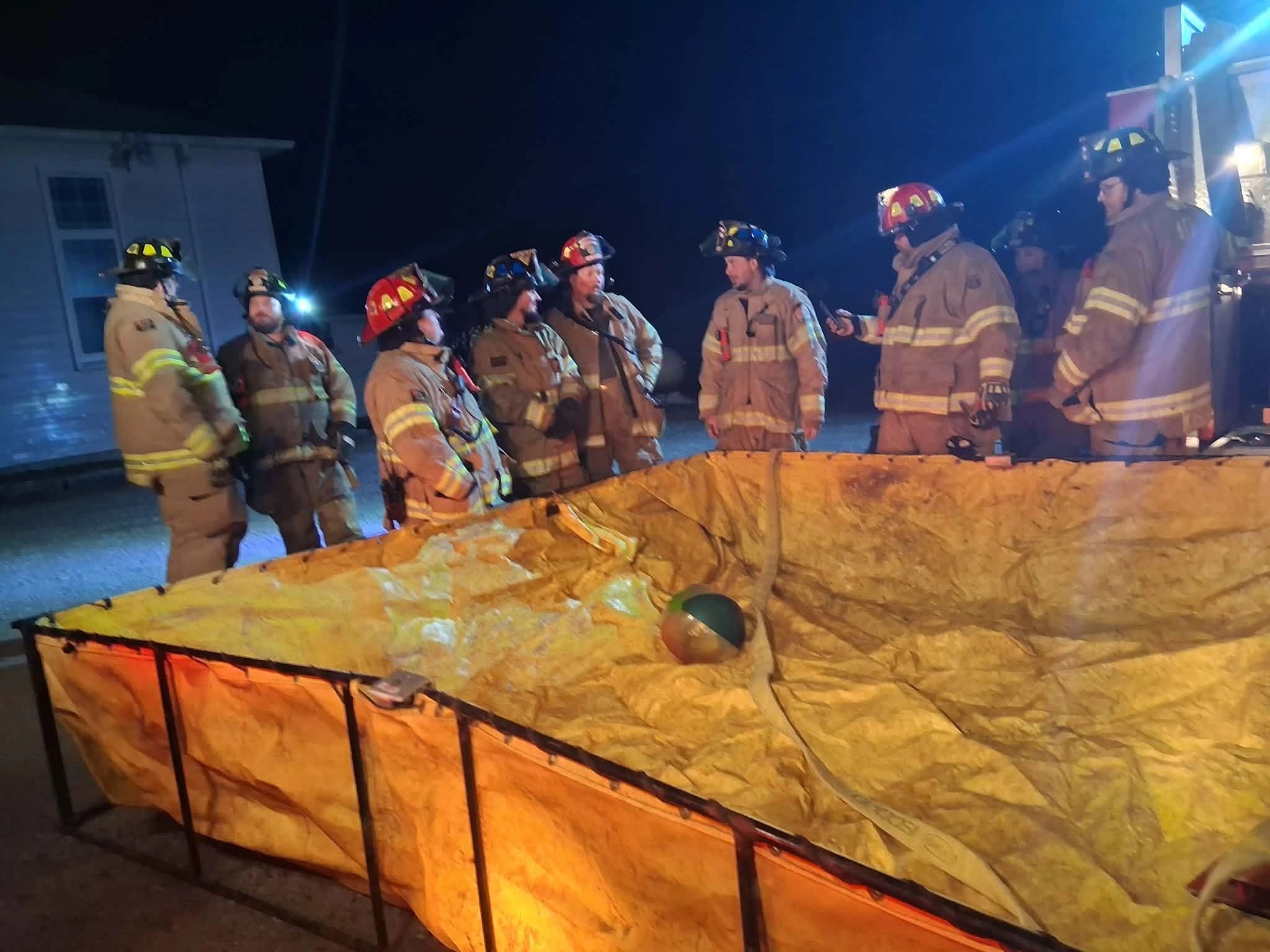
Fitness, as a side effect. Turnout gear and an air pack add roughly sixty pounds. Training nights involve hauling hose, throwing ladders, and working hard in gear. Plenty of volunteers get into better shape because they joined. It is the rare form of exercise with an actual deadline attached.
Skills that do not expire. CPR. Bleeding control. Recognizing a stroke. Reading a situation quickly and deciding what to do in the first sixty seconds. These follow you into every other part of your life, and you will use them — most volunteers end up using them off duty, in their own families, at some point.
A crew. This is the one people underestimate. Most adult friendship is built on shared leisure. Fire service relationships are built on mutual dependence: people who have done something difficult alongside you and would come if you called at three in the morning. Adults are generally very bad at making friendships like that after about thirty. A department hands you one.
The hard parts, said plainly
It would be dishonest to write this without the other side.
You will go to calls that stay with you. Some of them will involve people you know, because in a township of 786 people you know a lot of them. Your sleep gets interrupted. You will leave dinners, games, and occasionally your own plans. Your household has to be genuinely on board, not just tolerant.
And the pressure is real. The National Volunteer Fire Council reports that the number of volunteer firefighters nationally stands at 635,100, around 62% of the American fire service, while call volumes have more than tripled over forty years. Fewer people, more calls. That weight lands on individuals.
What makes the difference is whether a department talks about it. The ones that pretend everyone is fine lose people quietly. The ones that name it do better. Abington has a chaplain — David Sangster, the first in the department's history — handling critical incident stress debriefing and support after difficult calls. Having that in place, formally, is not a small thing.
You do not have to go through the door
If the interior firefighting part is not for you, the benefits above do not require it. Departments need pump operators, water supply, scene safety, equipment maintenance, administration, grant writing, fundraising, and the auxiliary. Every hour somebody else absorbs is an hour a firefighter gets back.
Abington runs fifteen active firefighters across twenty-one square miles. There is room for people who want to help in other ways, and the crew, the purpose, and the belonging come with those roles too.
If you are thinking about it
Most people who join spent a long time thinking about it first, and most of them say afterwards that they should have come sooner. The volunteer page has the practical detail, or call the station at (765) 855-3950.
You are not committing to anything by asking.
Common questions
Is volunteering actually good for your health?
Research consistently finds associations between volunteering and better mental health, reduced depression, greater life satisfaction, and in older adults lower mortality. These are associations rather than proof of cause, but the pattern holds across many studies and populations.
What makes firefighting different from other volunteering?
Three things: it is physically demanding, so it keeps you conditioned; it teaches genuinely high-value skills like CPR, bleeding control, and emergency decision-making; and it embeds you in a crew that depends on you, which is a stronger social tie than most volunteering produces.
Will volunteering as a firefighter be bad for my mental health?
It can be hard. You will see things most people do not. What protects people is a department that talks about it openly, peers who understand, and access to proper support. Abington has a chaplain handling critical incident stress debriefing.
Am I too old to volunteer with a fire department?
Probably not. Departments need people across a range of ages and roles, and not every role involves interior firefighting. Experience, reliability, and judgment are valuable, and older volunteers often bring exactly those.
How much time does volunteering as a firefighter take?
It varies by department and by person. Expect monthly training, periodic equipment checks, and calls you respond to when you are available. You are not expected to make every call — coverage is built across a roster of people each giving the hours they have.
Sources
- Corporation for National and Community Service. The Health Benefits of Volunteering: A Review of Recent Research
- Journal of Primary Care & Community Health. Exploring the Effects of Volunteering on Health and Well-being: An Umbrella Review (2023)
- National Volunteer Fire Council. Volunteer Fire Service Fact Sheet
Supporting the department
If joining is not for you right now, there are other ways to keep this department standing.
- The department store. We have stood up a store so the community can back the department directly. Every purchase helps pay for training hours, replacement gear, and the fire education we bring into Abington Township homes and classrooms.
- The community coloring book. A 40-page safety and coloring book built for Abington families, with local scenes, a twelve-month family safety calendar, and fire safety pages children actually use. Sponsorships and the Firefighter’s Hat Fund put the proceeds straight into training and community fire education.
- Our channels. Watch the crew at work on YouTube and follow day-to-day department news on Facebook.
- The Station News. Our free monthly newsletter — calls, training, events, and what the department needs — delivered once a month. Sign up on the newsletter page and you will not miss anything that happens in the township.
Frequently asked questions
Is volunteering actually good for your health?
Research consistently finds associations between volunteering and better mental health, reduced depression, greater life satisfaction, and in older adults lower mortality. These are associations rather than proof of cause, but the pattern holds across many studies and populations.
What makes firefighting different from other volunteering?
Three things: it is physically demanding, so it keeps you conditioned; it teaches genuinely high-value skills like CPR, bleeding control, and emergency decision-making; and it embeds you in a crew that depends on you, which is a stronger social tie than most volunteering produces.
Will volunteering as a firefighter be bad for my mental health?
It can be hard. You will see things most people do not. What protects people is a department that talks about it openly, peers who understand, and access to proper support. Abington has a chaplain handling critical incident stress debriefing.
Am I too old to volunteer with a fire department?
Probably not. Departments need people across a range of ages and roles, and not every role involves interior firefighting. Experience, reliability, and judgment are valuable, and older volunteers often bring exactly those.
How much time does volunteering as a firefighter take?
It varies by department and by person. Expect monthly training, periodic equipment checks, and calls you respond to when you are available. You are not expected to make every call — coverage is built across a roster of people each giving the hours they have.